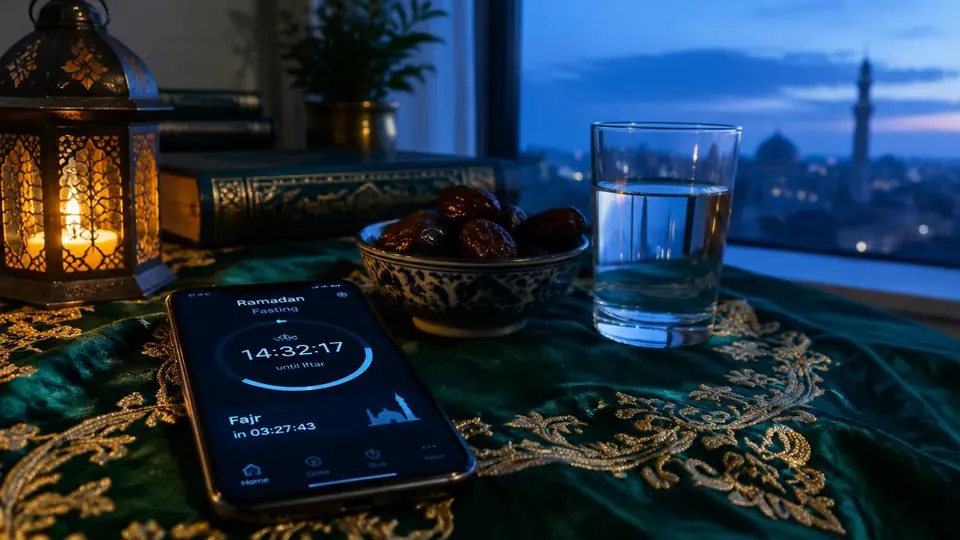

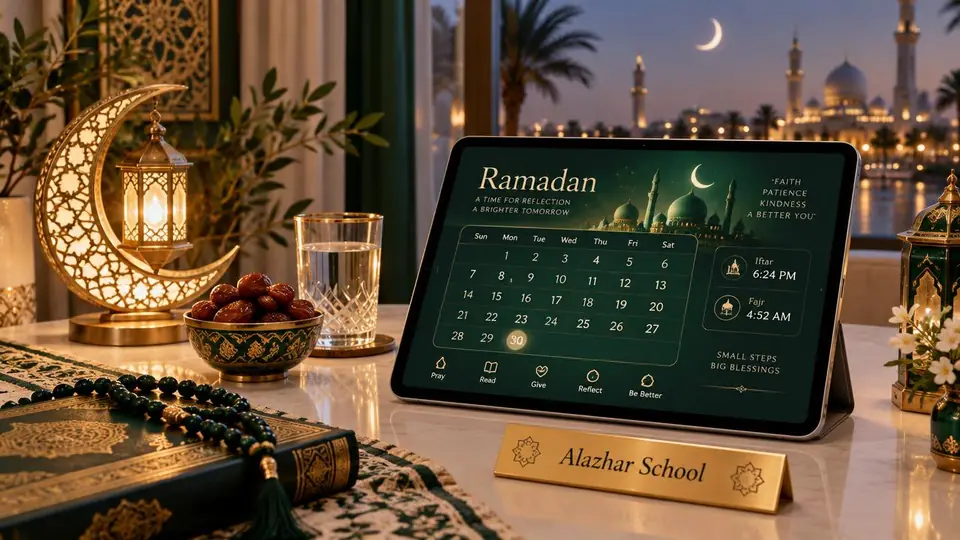
Fasting in Ramadan is one of the five pillars of Islam. From dawn (Fajr) to sunset (Maghrib), a fasting Muslim stops eating, drinking and marital relations — seeking closeness to Allah.
Who must fast?
Every adult, sane and healthy Muslim. The sick, travellers, pregnant or nursing women who fear harm, and the elderly have concessions to make up the days or feed a poor person. Scholars of the four schools differ on some details; ask your teacher about the view you follow.
مَنْ صَامَ رَمَضَانَ إِيمَانًا وَاحْتِسَابًا غُفِرَ لَهُ مَا تَقَدَّمَ مِنْ ذَنْبِهِ
“Whoever fasts Ramadan out of faith and hoping for reward, his previous sins are forgiven.”
Your daily rhythm
Make the intention in your heart, eat suhoor before Fajr — the Prophet ﷺ said there is blessing in it — and break your fast at sunset, ideally with dates and water.
- Intention before dawn
- Suhoor shortly before Fajr
- Iftar right at Maghrib
- Taraweeh and Quran at night
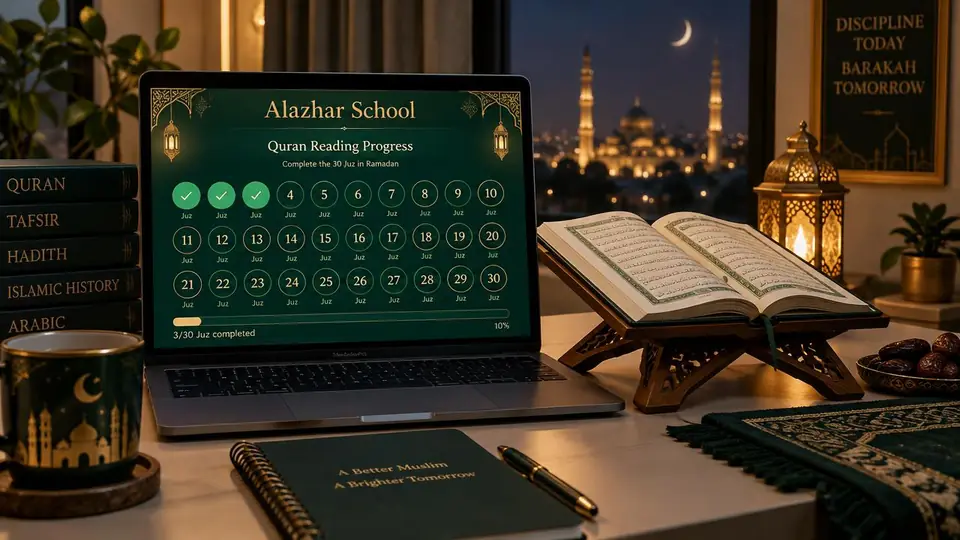
Make Ramadan a month of Quran
Ramadan is the month the Quran was revealed. Follow our Ramadan Quran plan or join online Islamic studies classes with a private teacher.
Keep learning with Alazhar School
Short Quran lessons, recitations and tips every week.
Topics covered in this guide
- Ramadan fasting guide
- how to fast in Ramadan
- Ramadan for beginners
- online Islamic studies
Knowledge check
One-question quick quiz
If a fasting person eats by mistake, what should they do?
Frequently asked
Learning with Al-Azhar online
Can I study Islamic Studies online from the USA, UK or Europe?
Yes. Live one-to-one classes are scheduled around international time zones, with the same teacher each week.
Are male and female Al-Azhar teachers available?
Yes. Families may request a qualified male or female teacher, subject to schedule availability.
Can I try a class before choosing a plan?
Yes. Every learner can book a 100% free trial class to meet a teacher and receive a starting-level recommendation.